
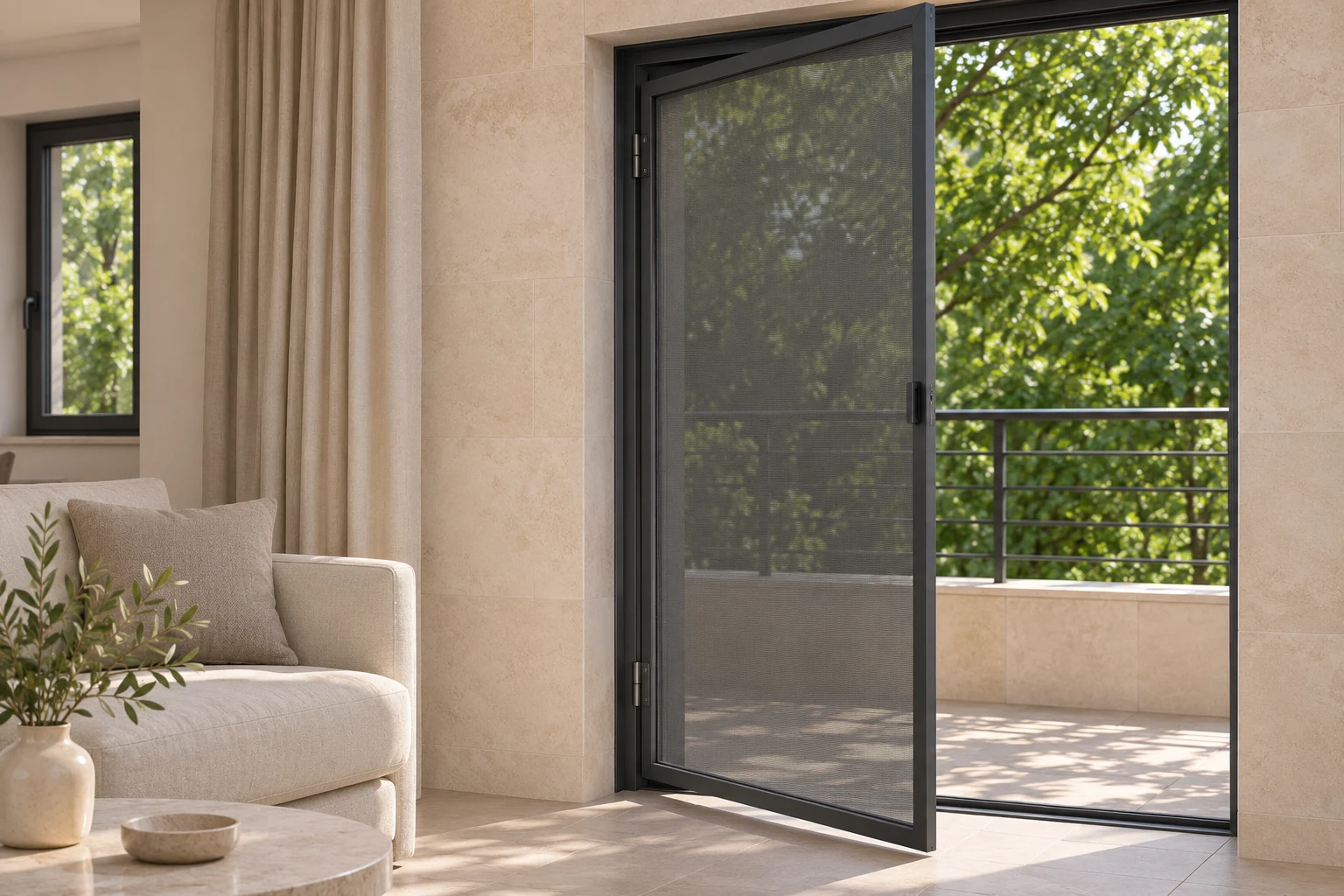
An aluminium insect screen profile forms the frame of a screen fitted to a window or balcony door. The frame holds the mesh taut and, in models that open, supports fittings such as hinges or tracks. Start by looking at the size of the opening and how you use the window or door. A system that works well for a kitchen window may be less convenient on a balcony door you open throughout the day. Considering measurements, opening direction, mesh and maintenance together can help reduce the need for adjustments later.
İçerik Başlıkları
Start with how you use the window or balcony door
The first question when choosing an aluminium insect screen is how often you use the opening. A removable fixed frame may suit a window where you do not need access to the outside and only take the mesh out occasionally for cleaning. If you regularly need to reach through the window, a hinged or retractable model may be more practical. For a hinged frame, check whether the trim, handle or roller shutter obstructs the direction in which the screen will open.
For a balcony door, ease of passage matters most. A hinged system needs space for the panel to swing. A sliding system needs room for the panel to travel sideways and a suitable surface for the track. If you are considering a pleated screen, check how the area where the mesh folds away affects the clear width of the doorway. Look at the height of the bottom track, too. On a frequently used door, the threshold directly affects how easy the doorway is to use and clean.
Measure from the intended mounting surface
Measure the width at the top, middle and bottom, and the height at the left, centre and right. Record the dimensions in millimetres so you can see where the opening varies. Take both diagonal measurements between opposite corners. A difference means the squareness of the frame needs checking. Along with your measurements, take an overall photograph of the window or door and close-ups of the frame. These make it easier to identify the intended mounting surface later.
Make sure you are measuring the surface where the screen will actually sit. A window handle, drip rail, roller shutter guide or stone sill can reduce the available mounting area. For an inside installation, allow for the movement of the window sash and handle. For an outside installation, consider whether the installer can reach the mounting surface. When determining manufacturing dimensions, check the installation allowance against the system drawing or the installer’s measuring instructions. The allowance can vary according to the model and installation method.
When sharing the dimensions, give each opening a number and use that number on the photographs as well. Two windows side by side may look identical from the outside, yet differ in mounting surface or handle position. These differences can be easy to overlook during an initial survey, especially with older frames. If you are fitting several screens, seeing a trial installation on a frequently used window or door can help you confirm the same details for the remaining openings.
Review the profile cross-section and fittings together
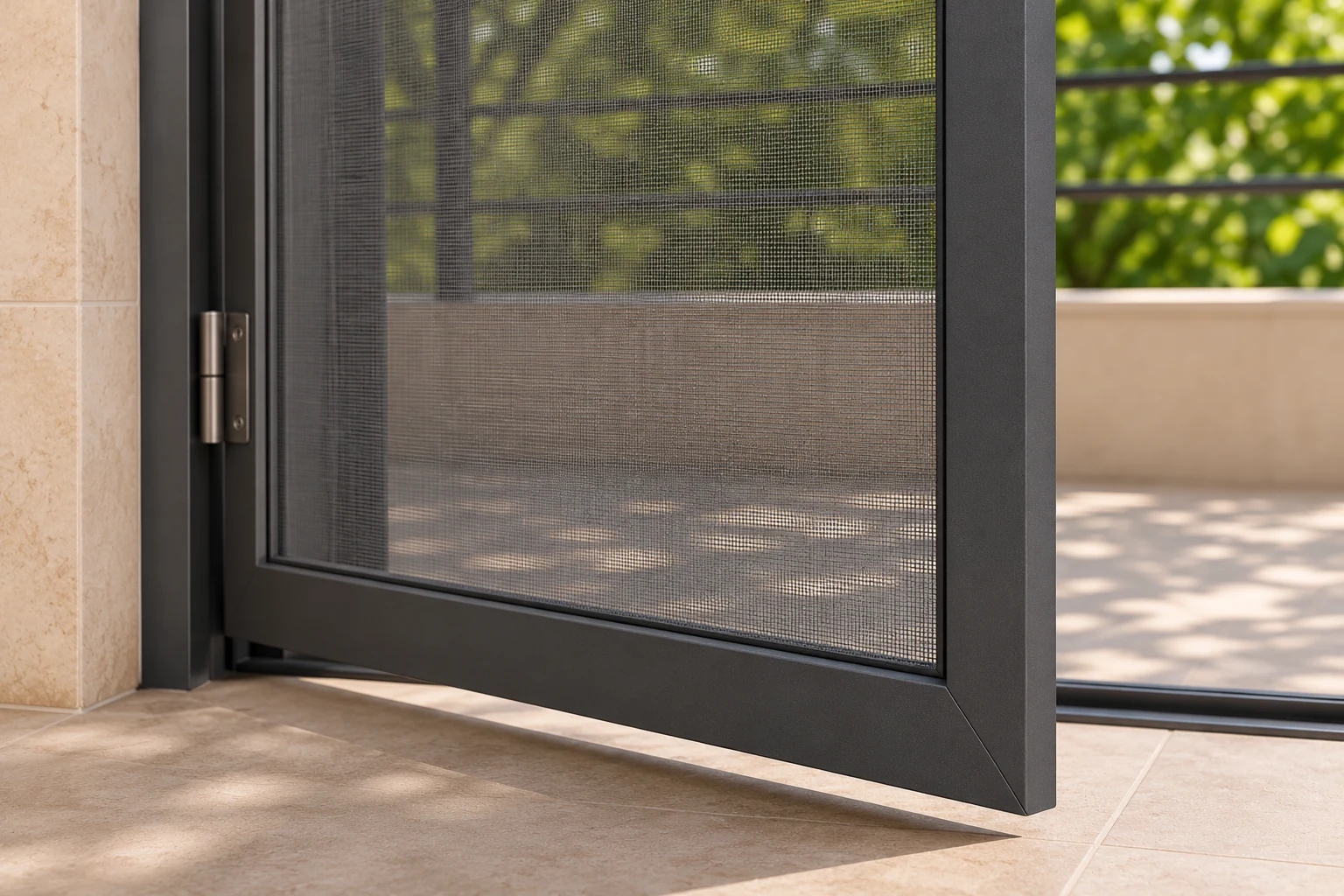
When selecting an aluminium insect screen profile, use the technical drawing to identify the mesh channel, corner joint and surfaces that receive the fittings. The spline that holds the mesh in the channel needs to match both the profile and mesh thickness. An incompatible corner joint can make it difficult to assemble a square frame. For wide or tall panels, check the manufacturer’s recommended maximum dimensions and whether a crossbar is needed to limit flex.
Match the fittings to the intended use. For a hinged door, consider hinge placement and the closing mechanism. For a sliding model, check that the rollers match the track so that the panel can move smoothly. Ask whether parts such as corner connectors, spline and rollers are available separately. If a single roller wears out, for example, being able to replace it may save you from having to replace the entire screen frame.
Choose the mesh, colour and finish
The size of the openings in the mesh affects airflow and visibility. A finer mesh may be preferable where small insects are common. If airflow is a priority, compare two mesh samples in similar colours side by side in daylight. If there are pets in the home, consider mesh options with a level of durability suited to the setting. For outdoor installations, account for exposure to sun, rain and salt air near the coast. Check the technical documentation to see whether the finish and fittings are suitable for those conditions.
If possible, note the colour code of the existing window or door frame. If you do not know it, compare a sample against the existing frame in daylight. Matt and gloss finishes can look different even within the same colour family. When fitting screens to several windows in the same building, see how the colour and finish look across the different openings.
Consider maintenance and everyday use
Ask how to clean dust from the bottom track of a sliding screen and how to remove a fixed frame when the mesh needs replacing. Follow the product’s care instructions. For a frequently used balcony door, try a working sample to check the handle position, how much effort it takes to open and whether there are gaps around the frame when it is closed. An insect screen frame supports the mesh. Where fall protection is required, choose a separate system designed for that purpose.
After installation, open and close the screen several times. Check that a sliding panel travels along the track without catching and that a hinged panel clears the window or door frame. Look at the corner joints and the edges of the mesh. If the mesh is loose along one edge, ask the installer to check whether the spline is seated properly. This quick test shows how the chosen dimensions and fittings work in everyday use.
For the final check, consider the opening dimensions, opening direction, mounting surface and mesh type together. On a window, allow enough access to remove the mesh. At a balcony door, keep the passage clear. If you intend to use the same profile in two openings, verify that the frame sits squarely in each one and that there are no gaps around the mesh when closed. When comparing sections, the technical documentation from an aluminium profile manufacturer can help you identify which fittings suit the profile.


