
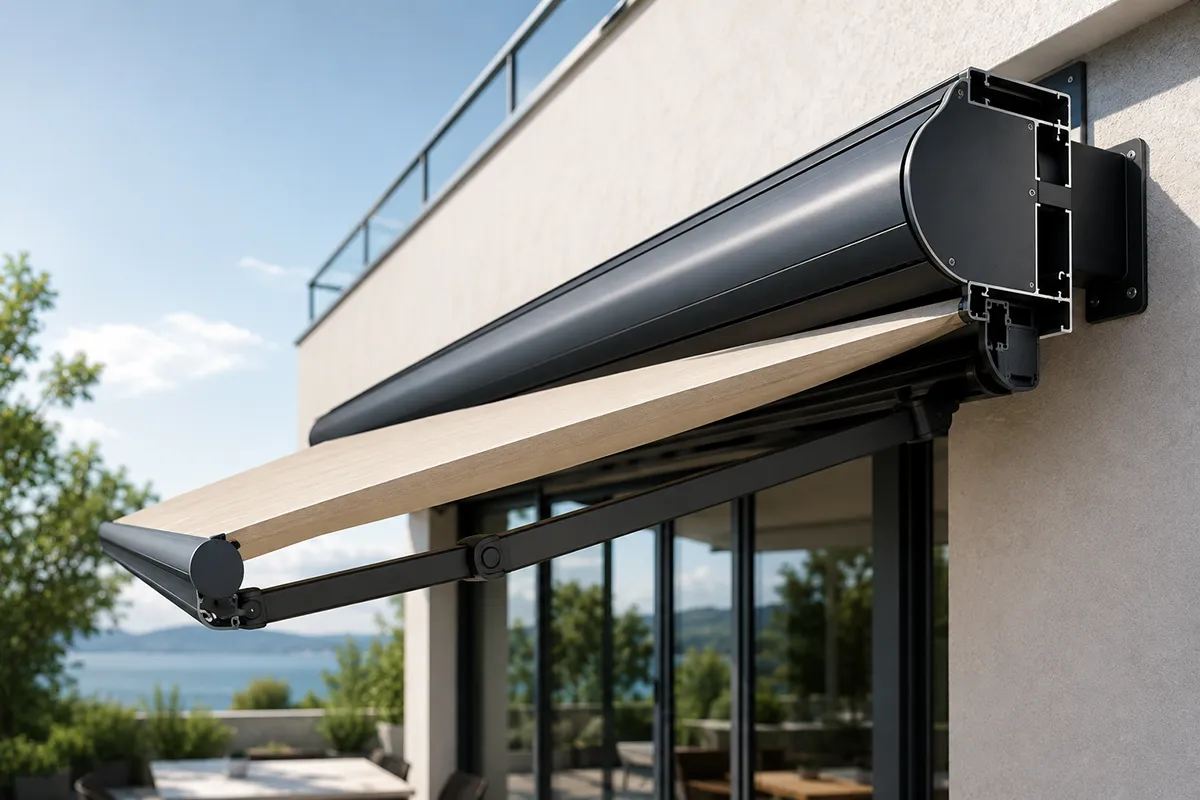
Awning systems provide protection against sunlight, rain, and various weather conditions while helping outdoor spaces become more comfortable and functional. Used in a wide range of applications, from residential buildings and restaurants to hotels and commercial properties, the durability of these systems largely depends on the profile structure. In this context, the aluminum awning profile is widely preferred in modern awning systems thanks to its lightweight structure, durability, and resistance to outdoor conditions.
Properly designed aluminum profiles manufactured through high-quality production processes contribute to the long service life of awning systems while also offering aesthetic solutions that can adapt to different architectural designs.
İçerik Başlıkları
What Is an Aluminum Awning Profile?
An aluminum awning profile is an aluminum structural component manufactured in specially designed cross-sections for use in the supporting structure, moving parts, and various connection points of awning systems.
Depending on the design and intended use of the awning system, profiles can be manufactured in different dimensions, cross-sections, and wall thicknesses. Aluminum extrusion technology makes it possible to manufacture complex profile geometries with high precision, allowing customized solutions to be developed for different types of awning systems.
The lightweight nature of aluminum provides a significant advantage, particularly in retractable awning systems. Reducing the overall load on the system can contribute to more efficient operation of mechanical components and improved ease of use.
What Are the Advantages of Aluminum Awning Profiles?
The physical and mechanical properties of aluminum offer several important advantages for awning systems.
The main advantages include:
- Lightweight yet durable construction
- High resistance to corrosion
- Suitability for outdoor conditions
- Availability in different dimensions and cross-sections
- Compatibility with electrostatic powder coating and various surface treatments
- Easy integration with modern architectural designs
- Long service life
- Low maintenance requirements
- Recyclability, making it suitable for sustainable construction projects
Thanks to these characteristics, aluminum awning profiles can be used in both residential and commercial projects.
Why Is Manufacturing Quality Important for Awning Profiles?
Since awning systems are continuously exposed to outdoor conditions, the manufacturing quality of the profiles is extremely important. Particularly in systems covering wide openings, the mechanical strength and dimensional accuracy of the profile can directly affect overall system performance.
When manufacturing a high-quality aluminum awning profile, factors such as alloy selection, extrusion precision, wall thickness, and dimensional tolerances should be carefully controlled.
It is also important that profile cross-sections are compatible with connection components and moving mechanisms. Precisely manufactured profiles can simplify installation while contributing to smoother and more efficient system operation.
Where Are Aluminum Awning Profiles Used?
Aluminum awning profiles can be used in different types of awning systems and a wide variety of architectural projects.
Common applications include:
- Balcony and terrace systems
- Outdoor areas of cafés and restaurants
- Hotels
- Villas and residential projects
- Storefronts
- Gardens and verandas
- Commercial properties
- Social and recreational areas
- Pergola and retractable shading systems
The dimensions of the project, operating mechanism, and environmental conditions should be evaluated when selecting the appropriate profile design.
The Importance of Surface Treatments for Awning Profiles
Awning systems may be continuously exposed to environmental factors such as sunlight, rain, humidity, and temperature fluctuations. Protecting the profile surface is therefore important for both durability and appearance.
Although aluminum is naturally resistant to corrosion, surface treatments such as anodizing and electrostatic powder coating can further improve the profile’s resistance to outdoor conditions.
Electrostatic powder coating also provides a wide variety of color options. This allows the awning system to complement the building façade and overall architectural design.
How to Choose the Right Aluminum Awning Profile
When selecting an awning profile, the decision should not be based solely on appearance or price. The technical requirements of the system should also be carefully considered.
The aluminum alloy, wall thickness, cross-sectional geometry, dimensional accuracy, and surface quality are among the main factors that should be evaluated. The span of the awning, operating mechanism, frequency of use, and outdoor conditions can also influence the selection of the appropriate profile.
Working with an experienced aluminum profile manufacturer can help ensure that the profile specifications and manufacturing quality are properly matched to the requirements of the system.
Conclusion
An aluminum awning profile is an important structural component that combines durability, lightweight construction, and aesthetic appearance in modern awning and shading systems. Its ability to be manufactured in different cross-sections and finished with various surface treatments makes it suitable for a wide range of architectural projects.
The combination of high-quality raw materials, precision extrusion technology, and appropriate surface treatments contributes to the development of reliable and long-lasting awning systems. For this reason, profile quality, technical specifications, and the manufacturer’s experience should all be considered when designing an awning system.
Frequently Asked Questions
What is an aluminum awning profile?
An aluminum awning profile is a specially designed aluminum structural component used in the supporting, moving, or connection sections of awning and shading systems.
Can aluminum awning profiles be used outdoors?
Yes. Aluminum’s natural resistance to corrosion makes these profiles suitable for outdoor applications. Appropriate surface treatments can further improve their resistance to environmental conditions.
Can aluminum awning profiles be painted?
Yes. Aluminum profiles can be finished with electrostatic powder coating in a wide range of colors, allowing the awning system to complement the architectural design of the building.
Where are aluminum awning profiles used?
They can be used in awning, pergola, and shading systems for balconies, terraces, verandas, cafés, restaurants, hotels, stores, villas, and other commercial or residential properties.
What should be considered when choosing an aluminum awning profile?
The aluminum alloy, wall thickness, cross-sectional design, dimensional accuracy, surface treatment, and manufacturing quality should all be considered. The span and technical requirements of the awning system should also be taken into account.


